

What Are The Ingredients In Oil-soluble Skin Whitening Raw Materials?
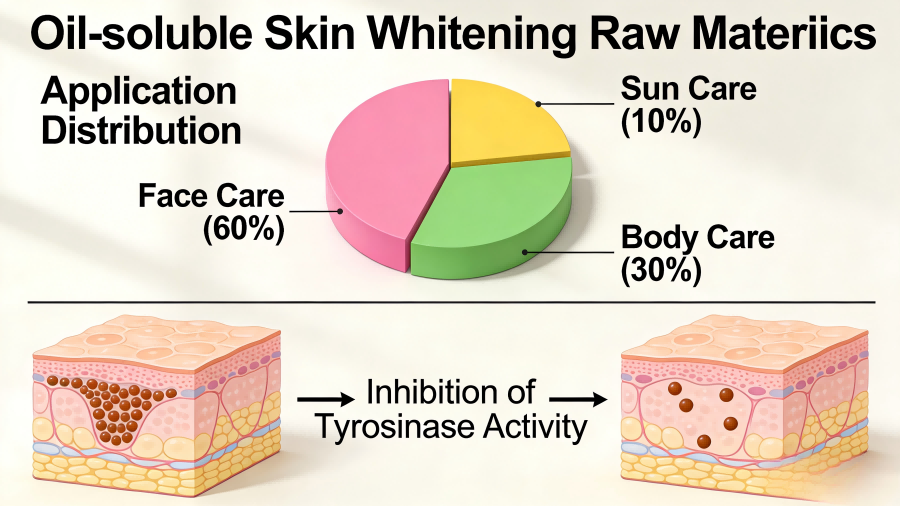
| Skin pigmentation stems primarily from the overproduction and abnormal accumulation of melanin. Synthesized in melanocytes via tyrosinase-catalyzed reactions, melanin is then transferred to keratinocytes to influence skin tone. Factors like UV radiation and environmental pollution further activate tyrosinase, accelerating melanin production. Oil-soluble whitening ingredients act via three key pathways:inhibiting tyrosinase activity to block melanin synthesis at the source, interfering with melanin transport to prevent epidermal accumulation, and boosting melanin metabolism to speed up pigment excretion. Compared with water-soluble counterparts, these oil-soluble substances have better affinity with the skin’s lipid layer, significantly enhancing the bioavailability of active ingredients. | 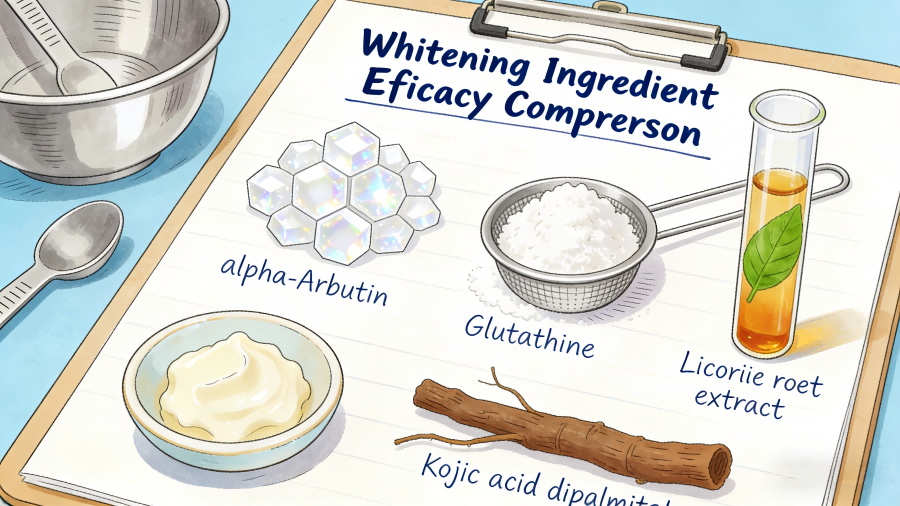 |
Common Types of Oil-Soluble Whitening Raw Materials
- Vitamin C Derivatives: Stable and Efficient Dual-Action Whitening Powerhouses
Vitamin C (ascorbic acid) is a classic whitening ingredient, but its poor stability and water solubility limit its application in oil-based products. To solve this problem, researchers have developed a series of oil-soluble vitamin C derivatives through molecular modification, among which Ascorbyl Tetraisopalmitate (VC-IP) and Ascorbyl Palmitate are the most widely used.
The biggest advantage of these derivatives is their significantly improved stability compared to pure vitamin C. They are not easily oxidized and decomposed when exposed to light and heat, which can maintain the activity of active ingredients during product storage and use. At the same time, their oil-soluble properties enable them to be perfectly compatible with oil-based formulations such as essence oils and creams, and can quickly penetrate the skin's stratum corneum to reach the basal layer where melanocytes are located. In addition to inhibiting tyrosinase activity, they also have strong antioxidant effects, which can scavenge free radicals generated by ultraviolet radiation and reduce oxidative damage to the skin, achieving the dual effects of whitening and Anti-aging.
- Kojic Acid Derivatives: Mild and Stable Tyrosinase Inhibitors
Kojic acid, a microbial fermentation extract with potent tyrosinase-inhibiting properties, is limited in wide application by its high irritation and poor stability. Kojic Acid Dipalmitate – its oil-soluble derivative – addresses these flaws via structural modification.
Compared to pure kojic acid, this derivative has lower skin irritation, reducing allergy risks and making it suitable for sensitive-skin formulations. Its stability is also markedly improved, retaining good activity in various oil-based systems. Its core whitening mechanism remains tyrosinase inhibition: it blocks tyrosine oxidation to dopaquinone, thus reducing melanin synthesis. Soluble in oil, ethanol and glycols, it is recommended for cosmetic use at 0.1–5%, with 3% being the efficacy-optimal concentration.
Research data confirms its synergistic effects with other whitening ingredients like niacinamide and vitamin C derivatives, further boosting overall whitening performance. Thanks to its mildness and stability, it is widely incorporated into oil-based whitening lotions, serums and sunscreens, where it inhibits UV-induced melanin production.
- Polyphenolic Compounds: Multi-Effect Whitening Ingredients with Antioxidant and Anti-Inflammatory Properties
Polyphenolic compounds are a large class of plant-derived natural actives, many of which feature good oil solubility and potent whitening effects. Resveratrol and Ferulic Acid are classic examples of this category, boasting multi-targeted whitening benefits: they not only inhibit tyrosinase activity but also exert antioxidant and anti-inflammatory effects to comprehensively regulate skin pigmentation.
Resveratrol, a polyphenol abundant in grapes and peanuts, has excellent oil solubility to penetrate the skin barrier effectively. It suppresses the expression of tyrosinase-related proteins and microphthalmia-associated transcription factor activity, thereby reducing melanin synthesis. Meanwhile, its strong antioxidant capacity scavenges free radicals, alleviates oxidative stress damage to the skin, and prevents UV-induced pigmentation. Ferulic Acid, by contrast, inhibits tyrosinase and blocks UV-triggered inflammatory responses. Since inflammatory factors are key drivers of melanin production, Ferulic Acid indirectly inhibits pigmentation by reducing skin inflammation.
- Plant Extracts: Natural and Mild Oil-Soluble Whitening Ingredients
Natural plant extracts remain popular in cosmetics for their mildness and safety, with many oil-soluble plant-derived variants offering excellent whitening effects – typical examples include Safflower Seed Oil, Rosehip Oil, and the oil-soluble derivative Arbutin Oleate.
Safflower Seed Oil is rich in unsaturated fatty acids and phytochemicals like acacetin. A PMC-published study verified that the oil and its active acacetin can inhibit UVB-induced matrix metalloproteinase-1 expression, while reducing UV-triggered melanin production by regulating JNK1/2 and c-Jun phosphorylation pathways. Rosehip Oil, also abundant in unsaturated fatty acids and polyphenols, promotes keratin metabolism and inhibits melanin synthesis, accelerating the shedding of melanin-containing aged keratinocytes for a brightening effect. Arbutin Oleate, the oil-soluble form of arbutin, boasts better oil solubility and skin penetration than water-soluble arbutin; it efficiently inhibits tyrosinase activity without causing excessive skin irritation.
Aligned with the global trend for natural, sustainable skincare, these plant-derived oil-soluble ingredients are widely used in plant-based serums and organic creams. Their mild, non-irritating properties make them suitable for all skin types, including sensitive skin.
- Other Synthetic Oil-Soluble Whitening Raw Materials: High-Efficiency and Low-Irritation Options
Beyond natural and semi-synthetic alternatives, the industry has developed synthetic oil-soluble whitening ingredients prized for their high activity and well-defined efficacy, with 4-Butylresorcinol and Hexylresorcinol as typical examples.
4-Butylresorcinol boasts excellent oil solubility and potent whitening activity: it efficiently inhibits tyrosinase to block melanin synthesis, and binds to skin fatty acids to prevent melanin transfer to the epidermis. Recommended for cosmetic use at 0.1–2%, it is highly compatible with various oil-based formulations.
Hexylresorcinol delivers stronger whitening effects than traditional ingredients like kojic acid and licorice extract. Clinical studies confirm its significant synergistic action when paired with niacinamide, vitamin C derivatives, and retinol. Compared to 4-Butylresorcinol, it has lower irritation, making it ideal for sensitive-skin targeted whitening products.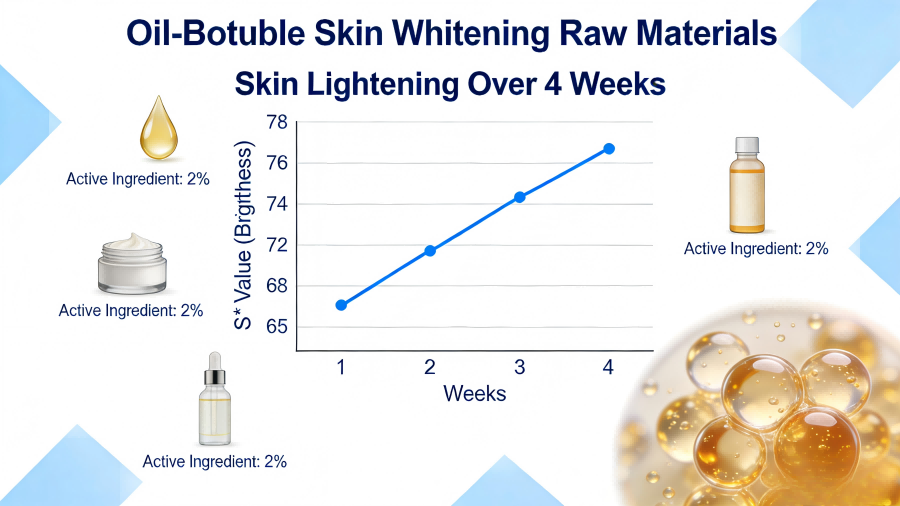
Product Advantages and Cosmetic Application of Oil-Soluble Whitening Raw Materials
- Core Product Advantages
Compared with water-soluble whitening raw materials, oil-soluble whitening ingredients have three core advantages. First, strong skin penetration: The skin's outermost layer is the stratum corneum composed of keratinocytes and lipids. Oil-soluble ingredients have good affinity with the lipid components of the stratum corneum, which can quickly penetrate the skin barrier and reach the target site to exert efficacy, avoiding the problem that water-soluble ingredients are difficult to penetrate and have low bioavailability. Second, good stability: Most oil-soluble whitening ingredients are less likely to be oxidized and decomposed by environmental factors such as light and heat, which can maintain the activity of active ingredients during product production, storage, and use, ensuring the stability of whitening efficacy. Third, compatibility with oil-based formulations: With the popularity of oil-based skincare products such as essence oils and facial oils, oil-soluble whitening ingredients can be perfectly integrated into these formulations, expanding the application scope of whitening ingredients and meeting the needs of consumers for multi-functional oil-based products.
- Application in the Cosmetics Field
Oil-soluble whitening ingredients are widely incorporated into diverse cosmetics, including essential oils, creams, lotions and sunscreens.
In the increasingly popular whitening essential oils, core actives like VC-IP, resveratrol and safflower seed oil deliver deep whitening benefits, while nourishing skin and repairing its barrier – addressing the dryness issue common with traditional whitening products.
For night repair creams, these oil-soluble ingredients are often paired with retinol and other anti-aging compounds. Leveraging the skin’s enhanced repair and absorption abilities at night, they boost melanin metabolism and mend photo-damaged skin simultaneously. In sunscreens, adding oil-soluble ingredients such as kojic acid dipalmitate and ferulic acid provides dual effects: blocking UV rays and inhibiting UV-induced melanin production.
It is critical to strictly adhere to regulatory limits on the concentration of these ingredients. For instance, 4-butylresorcinol is typically capped at 2% and hexylresorcinol at 1% in cosmetics. A well-designed formula ensures efficacy while preventing skin irritation.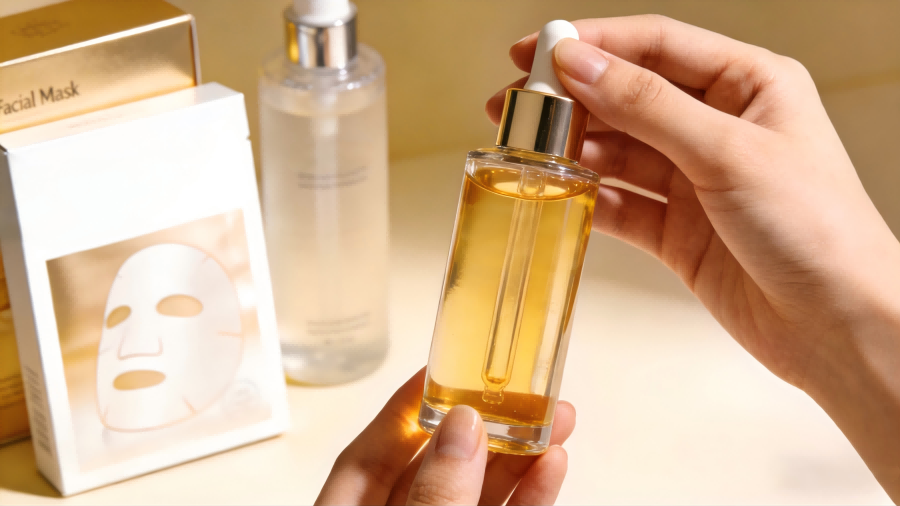
Conclusion
In conclusion, oil-soluble whitening raw materials, with their unique advantages of strong penetration, good stability, and mild efficacy, have become an important direction in the development of the global whitening cosmetics market. With the continuous advancement of research technology and the improvement of industry standards, it is believed that more high-performance oil-soluble whitening raw materials will be developed and applied, bringing safer and more efficient whitening solutions to consumers around the world.
- Name: Yuki
- E-mail: sales02@nahanutri.com
- WhatsApp:+8618066950297